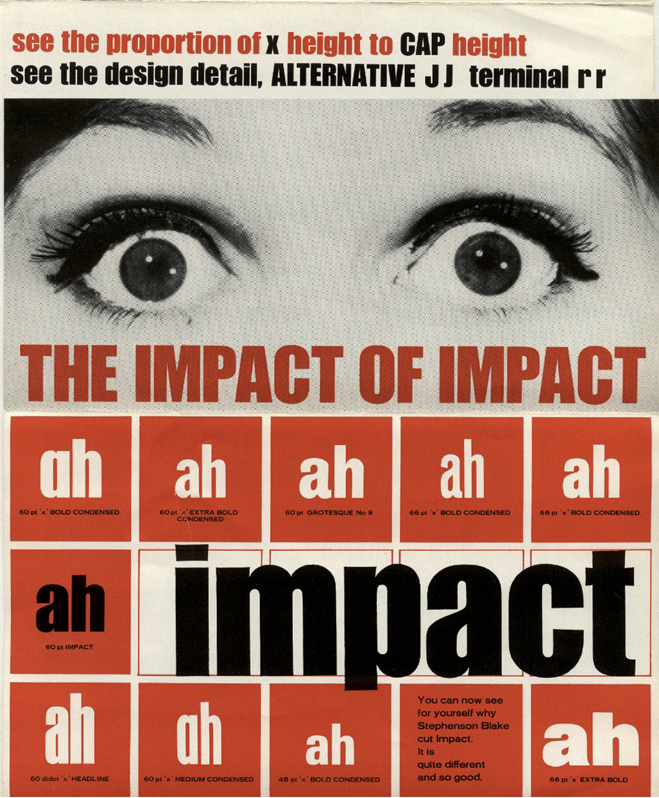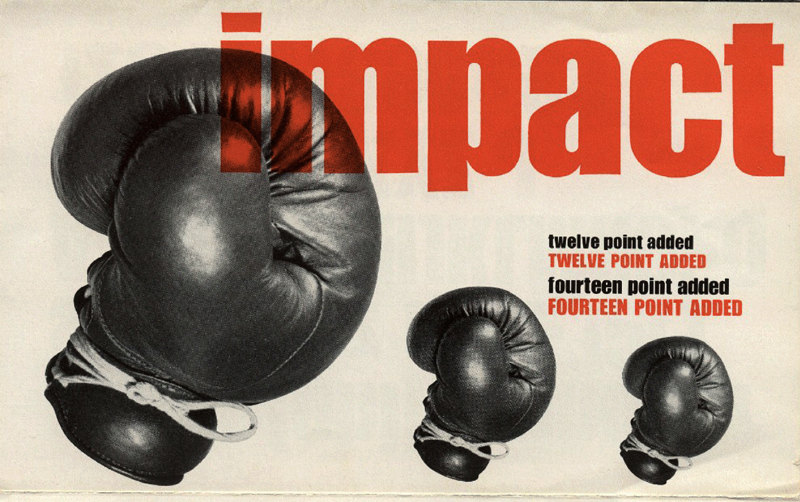
The Impact of Impact*
A review of Realist Sans typefaces
Geoffrey Lee claimed Impact was influenced by Schmalfette Grotesk
but I contend that Helvetica Inserat was the more obvious influence.
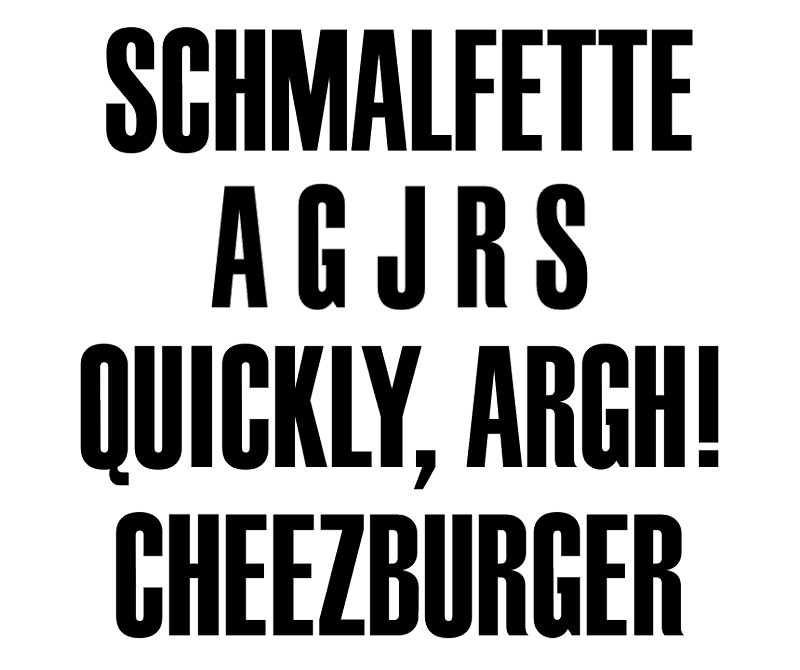
This is Schmalfette Grotesk (Schmalfette from German: schmal 'condensed' + fette 'bold'), the original Realist Sans.
This legendary typeface was drawn in 1954 by Swiss designer Walter Haettenschweiler and
became very popular amongst graphic designers but was notoriously difficult to get outside of Switzerland, why, in all my research I have not been able to ascertain the reason.
In the article the author states that Impact is “similar to its close cousin Haettenschweiler” but had the author done any cursory research at all he would have found that Haettenschweiler is not Impact's cousin, but its "uncle," its mother's boyfriend, a second rate, poorly drawn, bastardized version of Schmalfette Grotesk.
Haettenschweiler is clunky and lacks the original's elegant curves and balanced proportions.
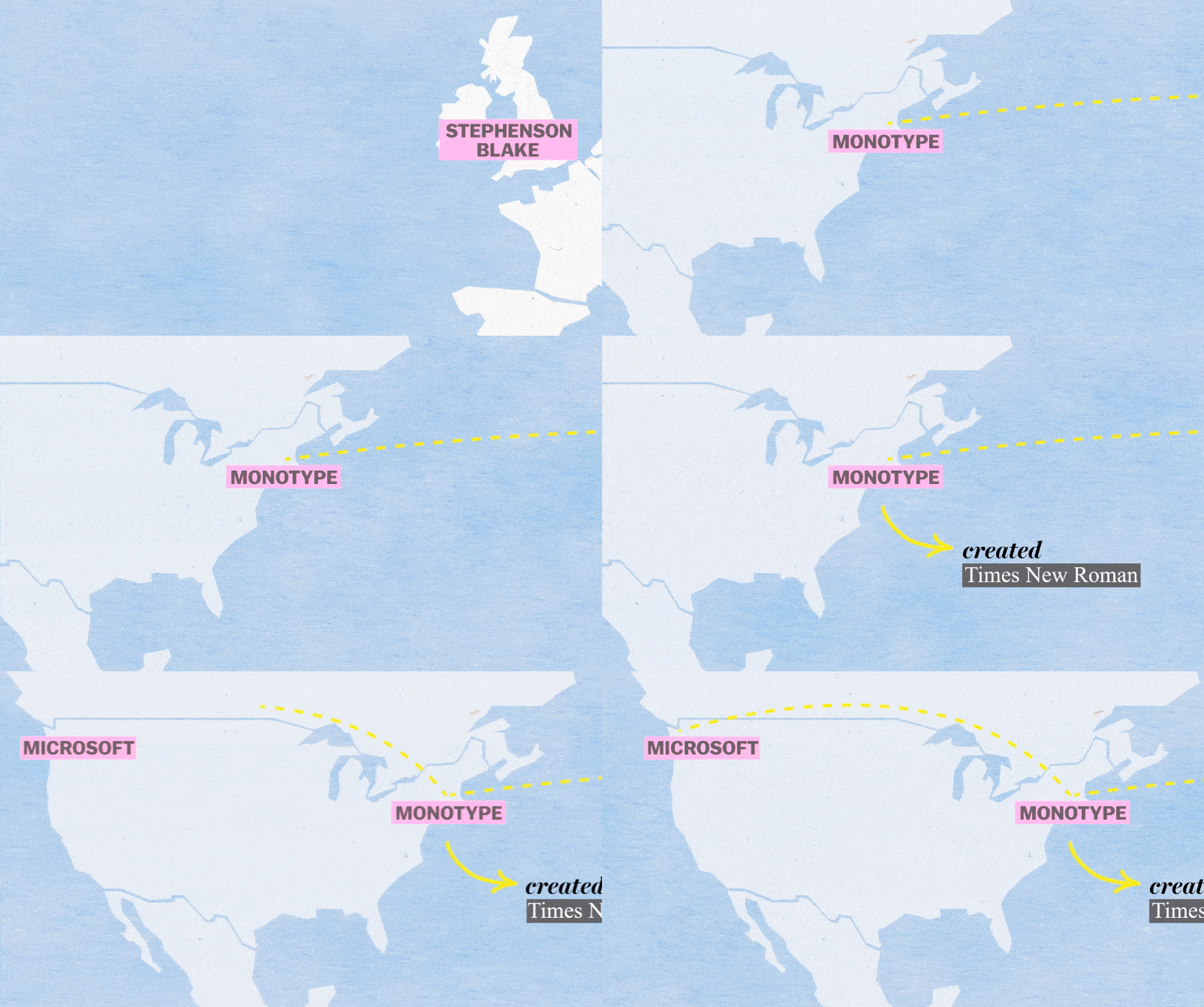
[Note: Haettenschweiler is brought to you by the same people, Monotype and Microsoft, who brought you that bastardization of Helvetica called Arial.]
Because Schmalfette Grotesk did not have lowercase letters
I uppercased Haettenschweiler to better compare the two
Helvetica Compressed was designed by Matthew Carter, of Verdana and Georgia fame, in 1966 to be "in practice similar to Schmalfette Grotesk"
and it is significantly dissimilar enough from Helvetica Narrow and Condensed that is not sold as part of the Helvetica Family.
One more nitpicky thing about the video, he makes the all too common mistake of mispronouncing the name of the typeface Univers,
designed by the great Adrian Frutiger.
It's French for universal and is pronounced o͞on-ē-vāre, not yo͞on-ĕ-vers.
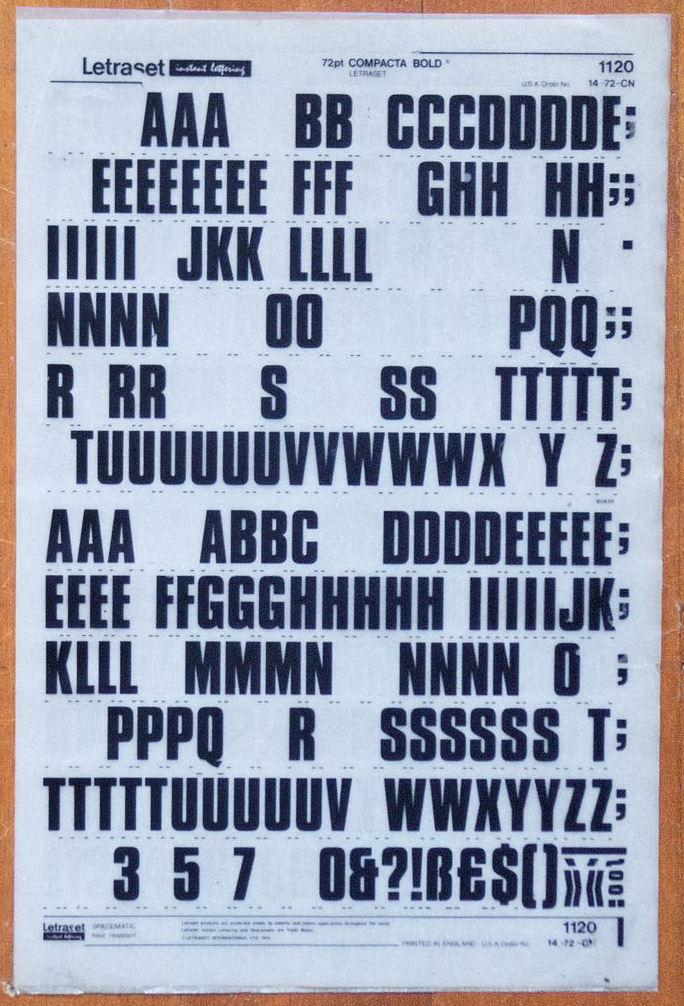
Compacta was designed by Fred Lambert for Letraset in 1963, and other then the original metal cut of Impact
it is the only one of the Realist Sans that came in multiple weights, and two of the weights, regular and bold, were offered in oblique versions.
Letraset offered it as one their Instant Lettering (view example) typefaces,
sheets of dry transfer lettering, kind of like decals, that allowed one to set type. Because the sheets were inexpensive Letraset became very popular amongst small
design firms and amateurs, it was desktop publishing before desktop publishing.
*Comparison of Inseret and Impact






Notice the different weights and widths of the original. There was also single bowl alternatives of the lowercase "a" and "g".